Storing water for 72 hours comes down to three decisions: how much, in what, and where. Get those right and the rest is a calendar reminder. Get them wrong and you end up with a closet of leaking jugs or water that tastes of plastic when you need it.
How much to store
The common planning figure is one gallon per person per day for drinking and basic hygiene. For three days that is three gallons per person. This is a floor, not a target.
Adjust upward for:
- Pets. Roughly half a gallon to a gallon per medium dog per day, more in heat.
- Heat and exertion. Hot climates and physical work raise intake substantially.
- Medical needs. Some conditions and medications increase water requirements.
- Cooking. If you plan to cook dried food, add water for that.
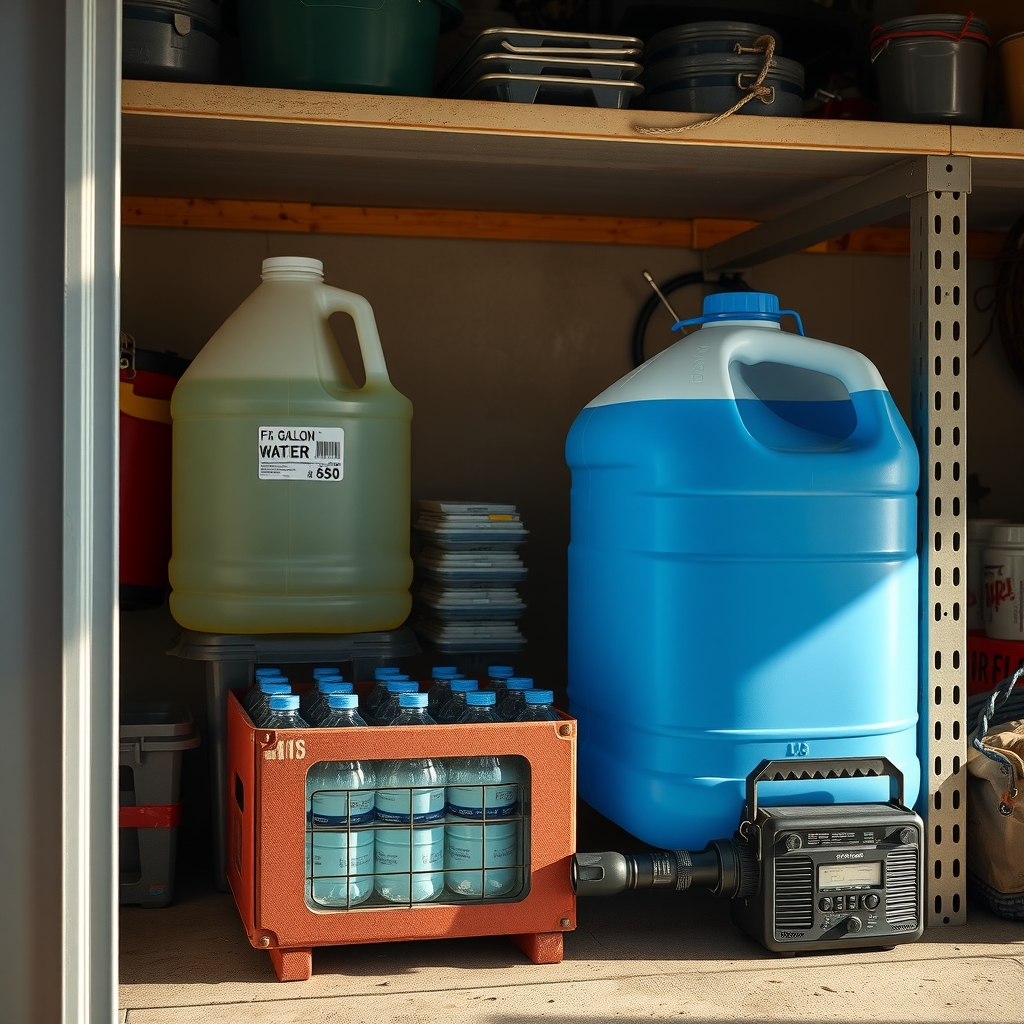
A household of four lands around twelve gallons for drinking and hygiene, plus cooking and pets. That is three standard cases of bottled water, or about four five-gallon containers. Both fit in the bottom of a closet.
Choosing containers
| Container | Good for | Watch out for |
|---|---|---|
| Commercial bottled water | Immediate use, easy rotation | Plastic degrades in heat and sunlight |
| Food-grade five-gallon jugs | Household baseline, stackable | Heavy when full, about 40 pounds |
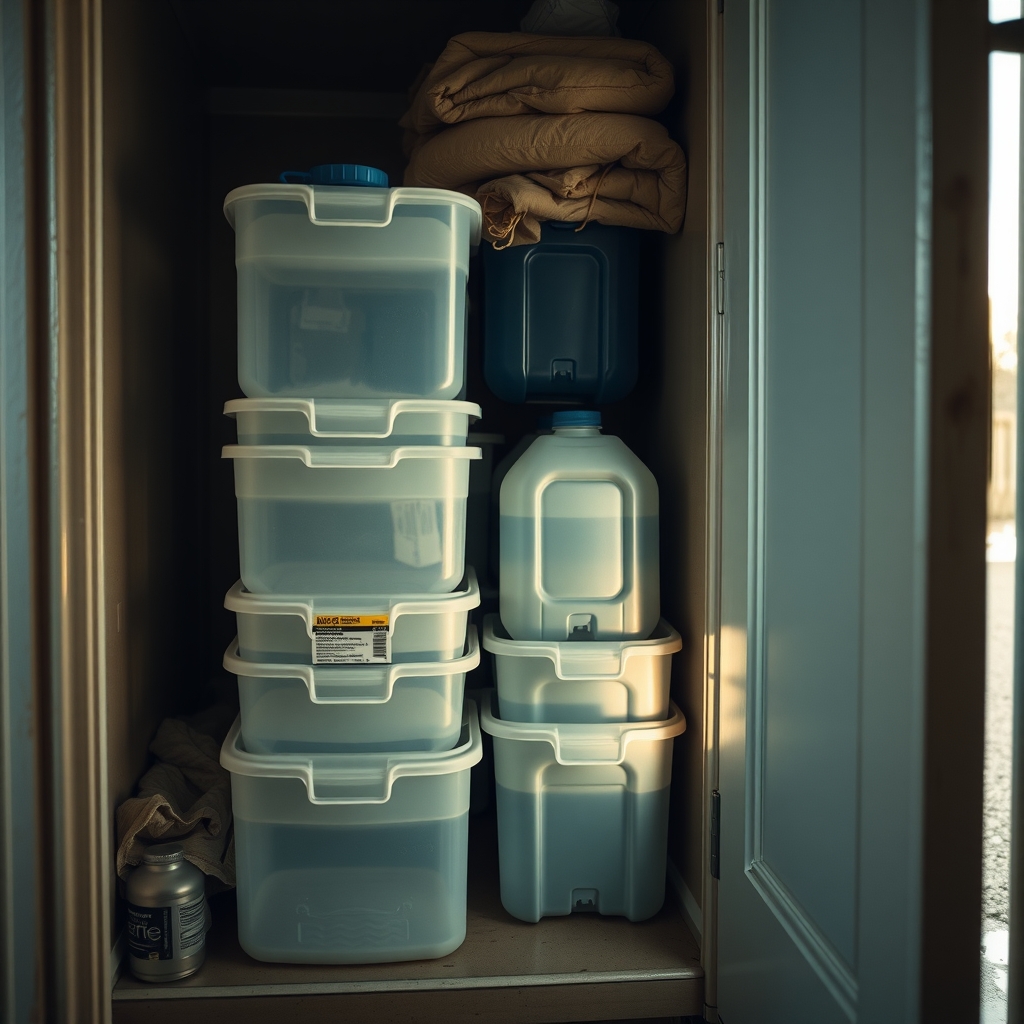
| Water bricks or stackable bladders | Tight spaces, stable stacking | Check the seal yearly |
| Bathtub bladder | Filling at the last minute | Only for non-drinking use unless labeled otherwise |
Use food-grade containers only. Do not store drinking water in used milk jugs, chemical containers, or anything that held something not meant for consumption. Those plastics and residues are difficult to clean out completely.
Where to store it
Pick a spot that is cool, dark, and dry. Heat and sunlight are the two things that degrade both the container and the taste of the water. A closet floor, a basement shelf, or the bottom of a pantry works.
Put a barrier between containers and a concrete floor. A scrap of plywood or a rubber mat is enough. Direct contact with concrete can affect the container over long periods.
Do not store water in an attic, a garage that bakes in summer, or next to a water heater. And do not stack heavy jugs above anything you care about.
Rotation without a spreadsheet
Water does not last forever, and the point of storing it is that it is drinkable when you need it. The simplest system is to date every container with a marker and set a reminder to use and refill.
- Write the fill month and year on each container.
- Put a recurring reminder in your calendar twice a year, ideally at a daylight saving change.
- On that date, drink or cook with the oldest water and refill it.
- Check seals, caps, and for any cloudiness or smell as you go.
Commercial sealed bottled water has its own best-by date. Rotate it the same way. If water looks cloudy, smells off, or the container is damaged, replace it rather than risk it.
Water you can also carry
A 72-hour kit that stays in the house is one thing. Water you can carry if you leave is another. Keep a smaller set of bottles or pouches in the go-bag, sized so one adult can actually carry it, and treat that supply as separate from the household stock.
Filtration is not storage
Filters and purification tablets are useful, but they do not replace stored water. A filter needs a water source, and in a real outage the source may be a tap that has lost pressure or water that needs treatment first. Store water you can drink without processing, and keep treatment as a backup.
If you want the whole household plan rather than just the water piece, PrepGuide builds a free 72-hour checklist and your household's water math from a short intake, and the full $37 playbook adds a 30-day food plan, a power-outage playbook, and a prioritized buy list matched to your budget. You can start with the free checklist on the PrepGuide homepage.
This article is general preparedness information, not professional or medical advice. Follow local emergency guidance and your own household's medical needs.
Frequently asked questions
Does stored water expire? Sealed commercial water has a best-by date and stays usable well past it if stored cool and dark. Water you fill yourself should be rotated every six to twelve months.
Can I store water in milk jugs? No. Those plastics are not designed for long-term water storage and are hard to clean thoroughly. Use food-grade containers.
Do I need to treat water I store myself? If it comes from a treated municipal supply and you use clean food-grade containers, it can be stored as is. Follow your local guidance if your supply is not treated.
How much water for a pet? Plan roughly half a gallon to a gallon per medium dog per day, more in heat. Cats need less. Add it on top of the human figure.